
How to Choose the Right Yoga Course
Yoga has moved a long way from being “just stretching.” It’s now a serious discipline that people study for physical health, mental clarity, spiritual growth, and, increasingly, as a career path in teaching. But that popularity has created a new problem — there are hundreds of yoga courses out there, ranging from casual weekend workshops to intensive multi-week residential programs, and it’s genuinely hard to know which one is actually right for you.
This guide walks through the practical questions to ask yourself before you enroll in any yoga course — what to look for, what to avoid, and how to compare schools without getting lost in marketing language.
The goal isn’t to sell you a specific program. It’s to help you figure out what “the right course” even means for your situation.
Start With Why: What Do You Actually Want From the Course?
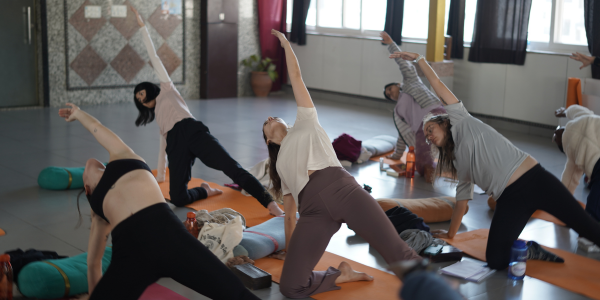
Before comparing schools, styles, or durations, get clear on your own goal. Yoga courses generally serve one, or more, of these purposes:
- Personal practice deepening — you already do yoga and want to understand it more seriously, refine your technique, or build discipline.
- Stress relief, health, or lifestyle change — you’re coming to yoga for wellbeing rather than teaching ambitions.
- Career or teaching intent — you want to become a certified instructor, either full-time or as a complement to another profession such as physiotherapy or fitness coaching.
- Spiritual or philosophical exploration — you’re drawn to yoga’s roots in meditation, philosophy, and self-inquiry, beyond the physical postures.
These goals aren’t mutually exclusive, but they do point you toward very different course structures. Write down your actual motivation before you start browsing — it will filter out a surprising number of unsuitable options immediately.
Once you know your “why,” the next question is where you’re starting from.
Beginner or Experienced Practitioner? Be Honest With Yourself
Course listings often say “suitable for all levels,” which is true in a marketing sense but not always in a practical one.
Complete beginners benefit from courses with a slower pace and more foundational alignment work, taught by instructors used to teaching people with zero prior practice. Intermediate practitioners with a home practice can usually handle more demanding schedules and get more from courses that refine technique and teaching skill. Experienced practitioners often look for advanced or specialized courses rather than another foundational program.
Be realistic here rather than aspirational. A course that stretches you a little is good; a course built for a level you haven’t reached yet can undermine both your body and your confidence.
Yoga Styles and Teaching Approach
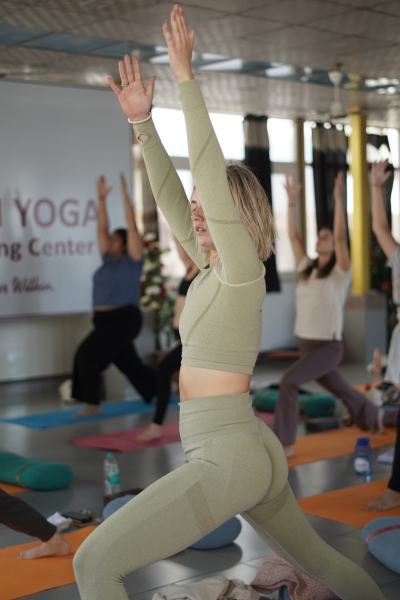
“Yoga” is an umbrella term covering quite different physical and philosophical approaches. Understanding what a course actually teaches shapes everything from physical intensity to underlying philosophy:
- Hatha — slower-paced, with an emphasis on alignment; a common base for many teacher trainings.
- Vinyasa — flow-based, linking breath to movement; more dynamic and physically demanding.
- Ashtanga — a set sequence, disciplined and physically rigorous.
- Iyengar — precision-focused, heavy on alignment and often uses props.
- Yin — slow, passive, long-held postures targeting connective tissue.
- Traditional or classical approaches — blend asana with a stronger emphasis on philosophy, breathwork, and meditation.
Neither is inherently better — it depends on the kind of practitioner or teacher you want to become. If you’re unsure, take a trial class or two in that style before committing weeks of your time and money to it.
Course Duration: Matching Time to Your Goal
Short workshops or retreats — a few days to a week, good for personal practice or exploring yoga without a teaching outcome.
Foundational teacher training programs — roughly three to four weeks intensive, or longer part-time, giving a structured grounding in asana, philosophy, anatomy, and teaching methodology.
Advanced or specialized trainings — for those who already hold a foundational certification and want to go deeper into an area such as therapeutic or prenatal yoga.
Duration alone doesn’t guarantee quality, but a rushed course tends to skim the surface rather than build real competence, especially in anatomy and teaching practice.
Duration tells you how much time you’ll spend.
The curriculum tells you what you’ll actually learn in it.
What a Good Curriculum Actually Includes
This is where a lot of course comparison should happen, and it’s often overlooked in favor of comparing price or location. A well-structured curriculum typically balances several components.
Practical Classes vs. Theory
A good course doesn’t lean entirely on physical practice, nor is it all lecture-based. If a course is almost entirely posture practice with minimal theory, you’ll come out flexible but underprepared to explain why a pose works, who shouldn’t do it, or how to sequence a class safely.
Anatomy and Physiology
Understanding how the body actually moves — joints, muscles, breathing mechanics, common injuries — is what separates a safe instructor from a risky one. This should be taught in enough depth to inform real teaching decisions.
Philosophy
Foundational texts and concepts, such as the yamas and niyamas or the eight limbs of yoga, give context to the physical practice and are usually a non-negotiable part of any serious course.
Pranayama, or Breathwork
Breathing techniques should be taught progressively and safely, with attention to contraindications, rather than introduced as an afterthought.
Meditation
A structured approach with different techniques introduced and practiced over the course is far more valuable than a single guided session tacked on at the end of the day.
Teaching Methodology
If you have any interest in teaching, even informally, this is one of the most important and most often under-delivered parts of a curriculum. Look for practice teaching sessions, instructor feedback, and guidance on sequencing classes.
Teacher Qualifications: Who Is Actually Teaching You?
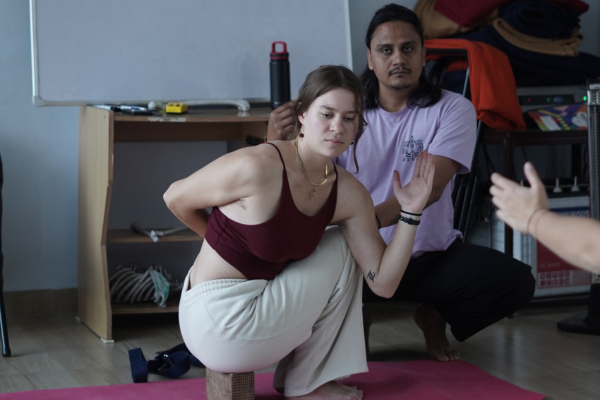
The credentials and experience of the instructors matter more than almost anything else on this list. Before enrolling, find out how many years of teaching experience the lead instructors have, what their own training background looks like, and whether anatomy, philosophy, and asana are taught by specialists or by one generalist trying to cover everything.
A course can have a beautiful setting and a polished website, but if the teaching staff isn’t genuinely qualified and experienced, the education itself will fall short.
Certification and Accreditation
If part of your goal is to teach professionally, certification matters — not as a piece of paper, but because it affects where you can teach and how seriously studios and clients will take your credential. Check whether the course is registered with a recognized yoga alliance or accrediting body, what certification level you’ll receive, and whether the certificate is internationally recognized if you plan to teach outside the country where you trained.
Be cautious of schools that are vague about accreditation or unwilling to clearly state which body registers their program.
Residential vs. Non-Residential Courses
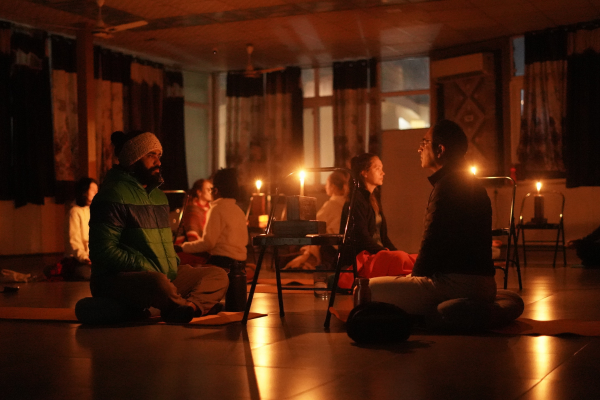
Residential courses — you live at or near the school for the duration. These create an immersive experience, reduce daily logistics, and build stronger community among students.
Non-residential courses — you attend sessions but manage your own accommodation and daily life around it. This suits people who need more flexibility or prefer a less immersive pace.
Neither is objectively better; it depends on how much you want the course to be a total immersion experience versus something that fits around an existing routine.
Location and Learning Environment
The physical and cultural environment shapes the experience more than most people expect. Consider whether the setting supports focus or is full of distractions, whether the location carries a meaningful cultural or spiritual context, and practical factors like climate, accessibility, and safety.
Batch Size
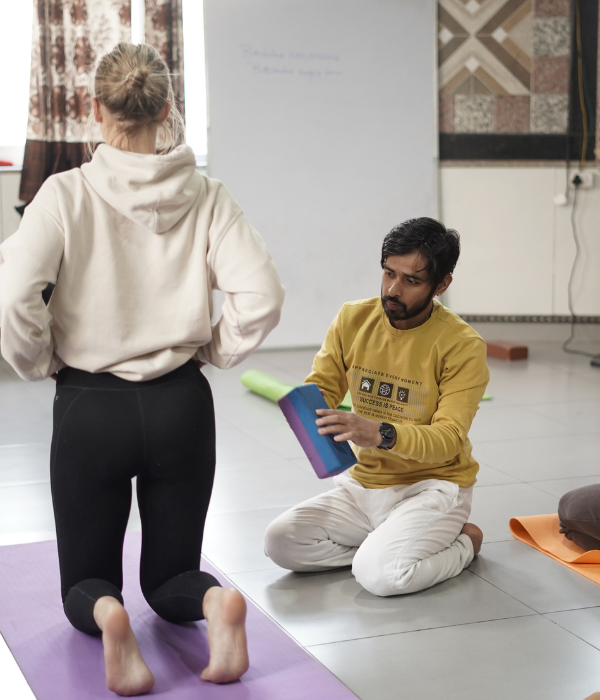
Smaller batches generally mean more individual attention, more correction on your alignment, and more opportunities to practice teaching in front of a manageable group. Very large batches can dilute the amount of hands-on feedback you receive, even if the curriculum on paper looks identical. Ask directly how many students are typically in a batch, not just the venue’s maximum capacity.
Accommodation and Food, Where Relevant
For residential courses, accommodation and food directly affect your energy and focus throughout an intensive schedule. Ask about room types, whether meals are included, what dietary style is offered, since many yoga courses serve vegetarian or sattvic meals, and access to basic amenities like drinking water, laundry, and rest spaces between sessions.
Once you know what to look for, the real work is comparing options side by side.
How to Compare Courses and Schools
Once you’ve narrowed things down based on your goals, level, and preferred style, compare shortlisted courses using consistent criteria:
- Curriculum breakdown — hours per subject area, not just a vague list of topics
- Instructor qualifications and specializations
- Certification and accreditation body
- Batch size
- Residential setup, food, and accommodation standards
- Reviews or testimonials from past students that mention specifics, not just general praise
- Cost, and what exactly is included in that price
Avoid comparing purely on price or marketing language like “transformational” or “life-changing” without matching it to the concrete details above.
Questions to Ask a Yoga School Before Enrolling
A short, direct conversation with a school before enrolling reveals a lot. Useful questions include:
- What is the daily schedule, and how is time split between practice and theory?
- Who teaches each subject area, and what’s their background?
- What certification will I receive, and is it accredited?
- What is the average batch size for this course?
- Is accommodation included, and what does it look like?
- What dietary options are available?
- What happens if I need to miss a session or arrive late?
- Can I speak to a past student or see recent reviews?
Schools that answer these clearly and specifically are generally more trustworthy than ones that respond only with general marketing language.
Choosing the Course That Actually Fits You
There’s no single “best” yoga course — only the one that matches your goals, experience level, and the depth of training you’re actually looking for. A short retreat, a foundational teacher training, and an advanced specialization are all valid choices; they just serve different purposes.
For someone looking for a comprehensive foundation in yoga and teacher training, a 200 hour program can be an appropriate next step. It’s generally the entry point into structured, certified teacher training — covering asana, anatomy, philosophy, pranayama, meditation, and teaching methodology in enough depth to build real competence, while still being accessible to those without years of prior training.
Whatever course you choose, take the time to compare properly.
It’s the difference between a course that changes how you practice and teach, and one that just fills a few weeks on a calendar.