

Yoga brings together postures, breathing and relaxation, and people of almost every age practise it. Research suggests it may help with several everyday concerns, but many studies are small and the results are mixed. This guide lists the benefits that research or experience most often points to, for adults and for children, and says clearly where the evidence is limited. It is general information, not medical advice.
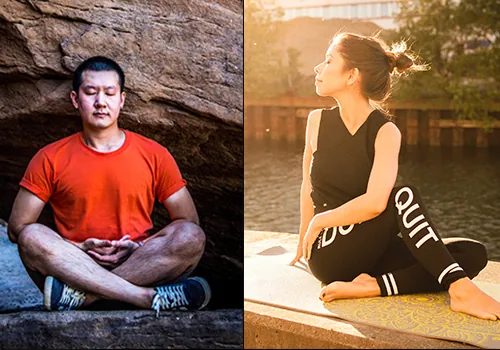
Benefits at a glance
| Area | What research and experience suggest |
|---|---|
| Stress and mood | May help with stress and mood; may be a helpful addition to depression treatment |
| Anxiety | May ease symptoms; evidence for anxiety disorders is limited |
| Sleep | May help sleep quality |
| Pain | Strongest evidence is for low back pain (a slight benefit); promising but limited for neck pain, headaches and knee osteoarthritis |
| Strength, flexibility, balance | Postures build all three with regular practice |
| Menopause | May ease some symptoms |
| Weight | May help people with overweight lose weight gradually |
This summary follows the US National Center for Complementary and Integrative Health (NCCIH). Yoga is not a treatment or a cure for any condition.
1. Stress, mood and anxiety
Slow movement and steady breathing give the mind a break from daily pressure, and many people feel calmer after a class. Research suggests yoga may help with stress and mood, and it may be a helpful addition to treatment for depression. For anxiety it may ease symptoms, but evidence for anxiety disorders is limited, and in one study yoga was less effective than cognitive behavioural therapy. Yoga is not a substitute for professional care if you are struggling.
2. Sleep
Some studies suggest yoga may improve sleep quality. A gentle evening routine, such as the poses in our Chandra Namaskar guide, is a pleasant way to wind down. If you have trouble sleeping for weeks, see a doctor.
3. Strength, flexibility and balance
Holding and moving through poses uses the muscles of the legs, arms, back and core, and regular practice usually brings better flexibility and balance. Start with the yoga poses for beginners and use props.
4. Back, neck and joint comfort
The best evidence is for low back pain, where yoga gives a slight benefit. For neck pain, headaches (including migraine) and knee osteoarthritis the evidence looks promising but is limited. Tell your teacher about any pain or injury, and see a doctor before you start if the pain is new or severe.
5. Heart health and blood pressure
Staying active and managing stress are both good for the heart, and yoga can be a part of that. We do not claim that yoga lowers blood pressure or cholesterol or treats heart disease. If you have high blood pressure or heart disease, ask your doctor which practice is suitable, and avoid extreme practices such as headstands and forceful breathing.
Looking for a perfect Yoga Teacher Training in Rishikesh?
Check out our 5 star rated 200 Hour Yoga TTC, 300 Hour Yoga TTC, 500 Hour Yoga TTC. Or our 7 days and 15 days yoga retreat in Rishikesh
6. Breathing and focus
Many yoga classes include breathing exercises (pranayama). Slow, even breathing is easy to learn and can help you notice when you are tense. Do not strain, and stop if you feel dizzy.
7. Energy, mood and community
Gentle exercise often lifts mood and energy, and a class gives you regular company and routine. Many people say these social benefits are what keep them practising.
Benefits for men
Many men start yoga to loosen tight hips, hamstrings and shoulders and to build balance and core strength alongside other exercise. Choose a style that suits your level, and build up gradually rather than forcing poses.
Benefits for women
Women practise yoga for strength, flexibility and stress relief at every stage of life. NCCIH reports that yoga may ease some menopause symptoms. If you are pregnant, get medical clearance first, choose a teacher trained in prenatal yoga, and avoid hot yoga and long periods lying on your back.
Benefits for kids
Children can enjoy short, playful sessions with animal poses, simple breathing and a few quiet moments. There is less research in children, so we do not make health claims. Many parents and teachers find it a fun way to build body awareness, balance and calm. Keep sessions short, never force a pose, and let an adult or qualified children’s yoga teacher guide them.
Who should take care
- Yoga is generally considered safe for healthy people when done properly with a qualified teacher. Sprains and strains are the most common injuries.
- Beginners should avoid extreme practices such as headstands, shoulder stands, lotus position and forceful breathing.
- If you are pregnant, injured or have a condition such as high blood pressure, glaucoma or balance problems, speak to your doctor and tell your teacher first.
- Hot yoga carries risks of overheating and dehydration.
- Do not use yoga to replace medical care or to delay seeing a doctor.
Conclusion
Yoga is a gentle, adaptable way to move, breathe and relax, and it suits men, women and children at different levels. Expect steady, modest benefits rather than cures, and build up slowly. Read about the benefits of yoga and meditation or learn with a teacher on our 200 hour yoga teacher training in Rishikesh.
Sources: NCCIH, Yoga. Written by the Rishikesh Yoga Teacher Training Center team. This is general guidance, not medical advice.