Constipation is common, and it is usually caused by everyday things such as too little fibre or water, too little movement, stress or changes in routine. Gentle yoga cannot cure it, but easy movement and slow breathing help some people feel more comfortable and relaxed. This page gives seven gentle poses with clear steps and safety notes, plus the simple habits that matter more and the signs that mean you should see a doctor.
What is constipation, and what helps most?
According to the UK National Health Service (NHS), you may be constipated if you open your bowels fewer than three times a week, your stools are dry, hard or lumpy, you strain, or you feel you have not fully emptied. Common causes are low fibre, not drinking enough, little physical activity, ignoring the urge to go, changes to diet or routine, some medicines, and stress or anxiety.
The NHS suggests these first:
- Eat more fibre gradually, for example fruit, oats and wholegrains.
- Drink plenty of fluids.
- Move regularly, for example a daily walk.
- Keep a regular toilet routine and do not delay when you feel the urge.
- Ask a pharmacist before using laxatives, which are normally for short-term use.
Can yoga help?
There is no strong evidence that any yoga pose treats constipation. What yoga can offer is gentle movement, which is a form of physical activity, and relaxation that may ease stress. Many people say they feel more comfortable after twists and knee-to-chest poses. Treat the poses below as a gentle routine, not a treatment.
When to see a doctor
See a doctor and do not rely on yoga if you have blood in your stool, unexplained weight loss, constant tiredness, tummy pain or regular bloating, a sudden change in your bowel habits, or constipation that does not improve or keeps coming back. Also speak to a doctor if a medicine, such as an opioid painkiller, might be causing it, and do not stop prescribed medicine without advice. If you are pregnant, check with your doctor before you practise.

Before you start
- Practise on an empty stomach or a couple of hours after a meal, on a non-slip mat.
- Move slowly and breathe through your nose. Hold each pose for 3 to 5 breaths unless the step says otherwise.
- Stretching should feel like a stretch, never like pain. Come out of any pose that hurts.
- Stop if you feel dizzy, sick or sharp tummy pain.
7 gentle yoga poses to try
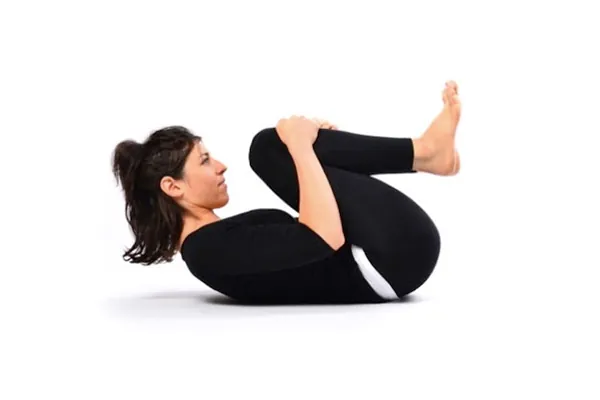
1. Pavanamuktasana (Wind-Relieving Pose)
A simple knee-to-chest pose lying on your back.
How to do it
- Lie on your back with your legs straight.
- Bend your knees and bring them towards your chest.
- Wrap your arms around your shins and hug your knees gently towards your belly.
- Keep your head on the floor, or lift it a little if your neck feels comfortable.
- Stay for 5 slow breaths, then release and straighten your legs.
Go gently: if you are pregnant or have a hernia or a recent abdominal operation, skip this pose or ask your doctor first.
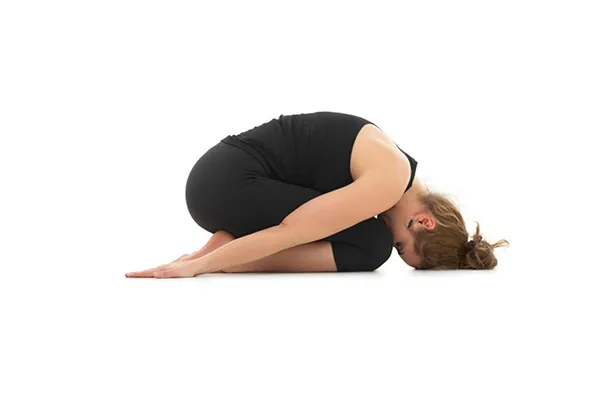
2. Balasana (Child Pose)
A resting pose that quietly stretches the back and hips.
How to do it
- Kneel on the mat with your big toes touching and your knees about hip-width apart.
- Sit back towards your heels and fold forward over your thighs.
- Rest your forehead on the mat and stretch your arms forward or let them lie by your sides.
- Breathe slowly into your back and stay for 5 to 8 breaths.
Go gently: if your hips do not reach your heels, place a folded blanket between your thighs and calves. If you are pregnant, take your knees wide to leave room for your belly. Skip it if you have a knee injury.
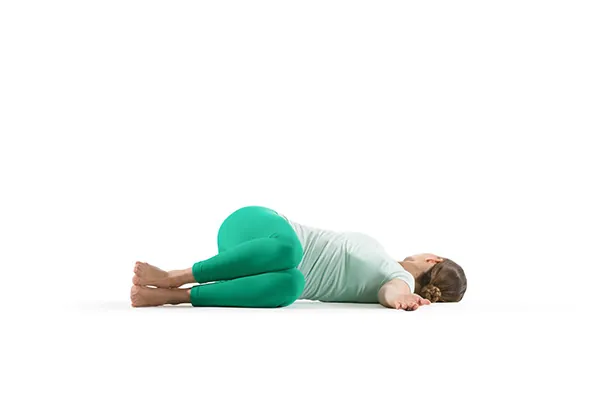
3. Jathara Parivartanasana (Reclining Twist)
A gentle twist lying on your back.
How to do it
- Lie on your back and bend your knees, with your feet flat on the floor.
- Stretch your arms out to the sides at shoulder height.
- Exhale and let both knees drop slowly to one side, keeping your shoulders on the floor.
- Turn your head gently the other way if it feels comfortable. Stay for 5 breaths.
- Bring your knees back to the centre and repeat on the other side.
Go gently: move only as far as is comfortable. Place a cushion between or under your knees if they do not reach the floor, and skip the twist if you have a back injury.
4. Bhujangasana (Cobra Pose)
A gentle backbend lying on your stomach.
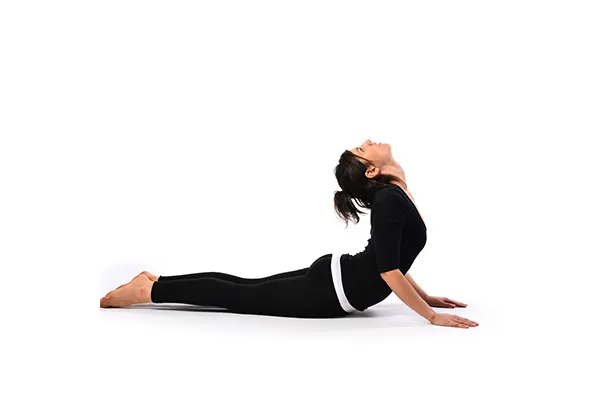
How to do it
- Lie on your stomach with your legs together and the tops of your feet on the floor.
- Place your palms on the mat beside your lower ribs and keep your elbows close to your body.
- Inhale, press gently into your hands and lift your head and chest. Keep your elbows slightly bent and your lower belly on the floor.
- Look forward and keep your neck long. Hold for 3 to 5 breaths.
- Exhale and lower down slowly.
Go gently: lift only as high as is comfortable and do not push your lower back. A low cobra with your elbows bent is enough. Skip this pose if you are pregnant or have a back injury, hernia or recent abdominal surgery.
5. Salabhasana (Locust Pose)
A gentle back-strengthening pose lying on your stomach.
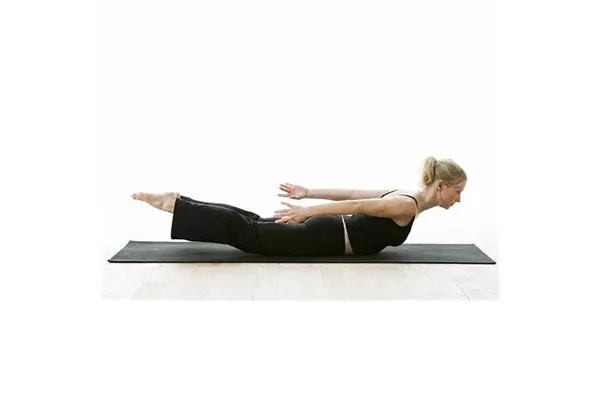
How to do it
- Lie on your stomach with your arms by your sides and your forehead or chin on the mat.
- Inhale and lift your head, chest and one leg a few inches off the floor.
- Hold for 3 breaths, lower, then repeat with the other leg.
- As you get stronger you can lift both legs together for a few breaths.
Go gently: keep your lift small. Skip this pose if you are pregnant or have lower back pain, a hernia or recent abdominal surgery.
Looking for a perfect Yoga Teacher Training in Rishikesh?
Check out our 5 star rated 200 Hour Yoga TTC, 300 Hour Yoga TTC, 500 Hour Yoga TTC. Or our 7 days and 15 days yoga retreat in Rishikesh
6. Janushirasana (Head-to-Knee Pose)
A seated forward bend over one leg.
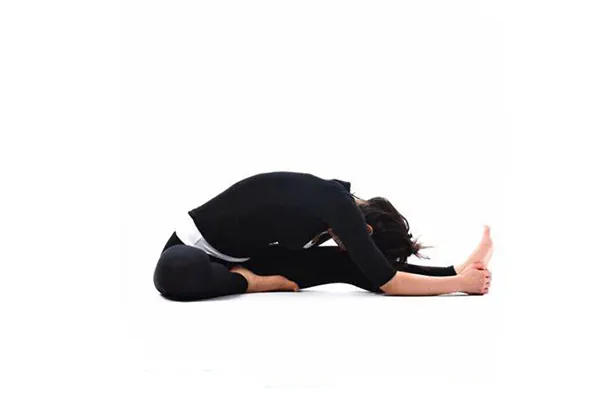
How to do it
- Sit with your legs straight in front of you.
- Bend your right knee and bring the sole of your right foot to your left inner thigh.
- Inhale and raise your arms. Exhale and fold forward from your hips over your straight leg.
- Rest your hands on your shin, ankle or foot, or hold a strap. Keep your spine long and do not force your head to your knee.
- Stay for 5 breaths, come up slowly and repeat on the other side.
Go gently: sit on a folded blanket and bend your straight knee if your hamstrings or back feel tight.
One pose for experienced practitioners only
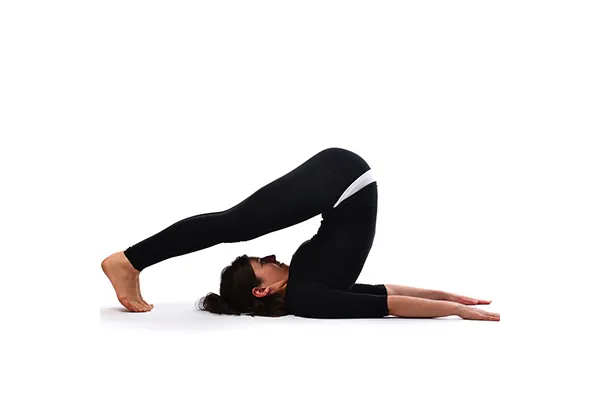
Halasana (Plough Pose) is an inverted pose that puts weight on the neck and shoulders. Beginners are advised to avoid inversions such as headstand and shoulder stand, so we do not recommend it as a way to ease constipation. If you already practise it with a qualified teacher, you will know the steps. Avoid it if you have neck problems, high blood pressure, glaucoma or are pregnant.
Conclusion
Gentle yoga is a pleasant way to move and relax, and it may help you feel more comfortable. For constipation itself, fibre, fluids, regular movement and a regular toilet routine matter most, and persistent or worrying symptoms need a doctor. Keep learning with our guide to yoga poses for beginners or read about the benefits of yoga and meditation.
Source for the constipation facts: NHS, Constipation. Safety notes follow NCCIH, Yoga. Written by the Rishikesh Yoga Teacher Training Center team. This is general guidance, not medical advice.